A trade license can arrive in an afternoon. The bank account is another matter.
For thousands of founders who set up shop in the United Arab Emirates each year, the moment of incorporation is followed by a quieter, more consequential question: how fast can the company actually get paid? Without an International Bank Account Number, or IBAN, a new business cannot send an invoice, receive a client transfer or pay a supplier. It exists on paper, and not much further.
Increasingly, entrepreneurs face a choice between two routes to that number. One is a fast, largely digital process that can produce an IBAN in short order. The other is the traditional path, run by a relationship manager, slower but more thorough. Neither is inherently better. The right answer, bankers and advisers say, depends less on preference than on what kind of company you are running.
Same rules, different rhythms
The distinction is often misunderstood. A digital-first account is not a lighter-touch version of a conventional one. Both are governed by the same compliance standards set by the Central Bank of the UAE. What differs is the sequence.
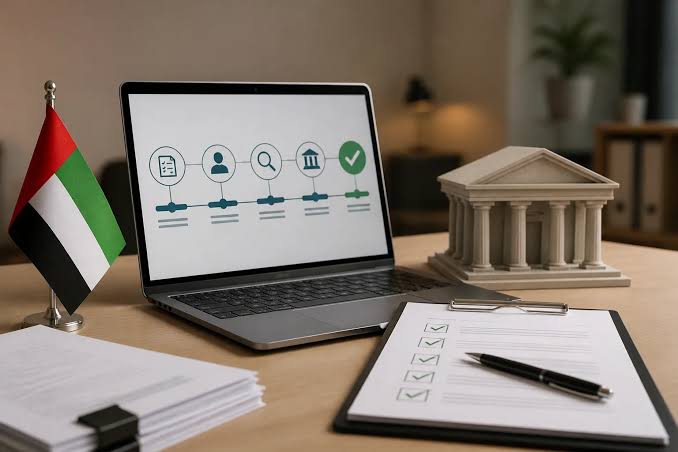
In a digital onboarding, the founder applies online, uploads documents and, once the bank’s initial checks clear, receives an account number. The bank may continue its know-your-customer review afterward. In a traditional opening, more of that scrutiny happens before the account exists at all, often involving meetings, follow-up questions and a dedicated contact at the bank.
Put simply, one route front-loads speed; the other front-loads review.
The fine print on “instant”
The word “instant” deserves some caution. Receiving an IBAN does not always mean an account is fully operational. Some banks issue the number first and complete compliance work later, which can leave certain features restricted in the meantime.
For a founder eager to start billing, that may be a perfectly acceptable trade. But advisers recommend confirming full activation rather than treating the arrival of an IBAN as the finish line.
What actually slows things down
Whichever route a company takes, the same handful of factors tend to determine how long the process lasts.
Ownership is the first. A company with a single shareholder and a clean Memorandum of Association usually moves quickly. One with corporate shareholders, multiple signatories or layered group structures will be asked for more, including documents from parent entities.
Business activity is the second. Banks weigh sector risk case by case, and companies in areas such as cryptocurrency or cross-border trading can expect closer examination than, say, a marketing consultancy.
The third factor is the most avoidable: paperwork. Banks typically request a trade license, Memorandum of Association, share certificate, passport copies and proof of address for shareholders and signatories, and sometimes a brief summary of expected transaction volumes. When names or details fail to match across those documents, applications stall. A consistent file, more than any choice of route, is the surest way to avoid delays.
Who each route suits
Consider two hypothetical founders. The first is a freelance software developer who has just formed a one-person company and has a client waiting to pay. For her, a digital-first account that produces an IBAN quickly is likely the sensible choice; she needs to invoice, and her structure is simple.
The second runs a trading company with several partners, large and frequent transfers, and plans to seek trade finance. He may wait longer for approval through a traditional bank, but he gains a relationship manager who understands his business, helps setting appropriate transaction limits, and access to credit facilities that digital-first accounts may not offer.
Many companies, advisers note, eventually use both, starting with whichever fits their first months and adding the other as operations expand.
Narrowing the field
For founders trying to open business bank account in UAE without months of trial and error, some free zones now act as intermediaries. Meydan Free Zone in Dubai offers what it calls a guaranteed IBAN pathway through more than 26 partner banks, spanning conventional, Islamic and digital lenders.
Through its mCore support package, the free zone’s bank account assistance service helps founders shortlist suitable banks, submit applications to one or several at once and arrange appointments with bank representatives. The banks still conduct their own reviews before granting full activation, which means a well-prepared application remains essential.
A practical sequence
Advisers suggest a straightforward approach. Assemble documents early and check that every name and detail lines up. Match the bank to the business model, weighing the urgency of invoicing against longer-term needs such as credit and trade services. Then respond promptly to any requests from the bank, and track the application until the account is fully live, not merely numbered.
The decision, in the end, comes down to speed versus depth. For a solo founder, getting paid next week may matter most. For a growing trading house, the strength of a banking relationship may matter more. The companies that fare best, it seems, are the ones that know which of the two they are before they apply.