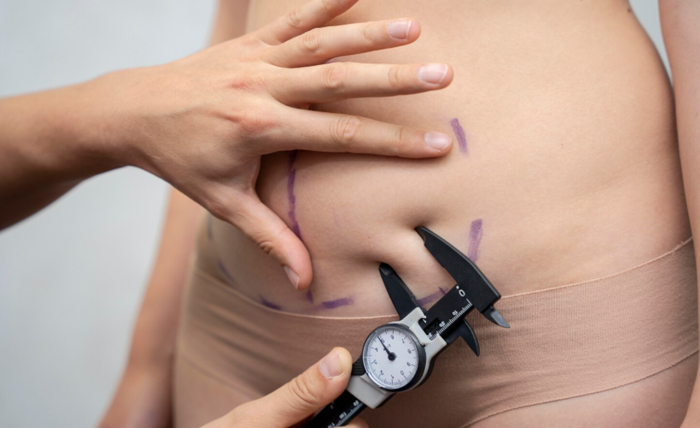
A full abdominoplasty (often called a full tummy tuck) is best understood as abdominal wall restoration, not simply “skin removal.” Many people reach a point where fat loss, strength training, and good nutrition still can’t solve the same stubborn issues: a persistent lower belly “apron,” loose skin that won’t tighten, and a feeling that the core has lost its firmness after pregnancy, major weight change, or time. That’s because the problem often isn’t effort—it’s structure.
In a full tummy tuck, the surgeon addresses the two layers most responsible for that “stretched-out” look:
- The inner support layer (fascia and muscle separation) that can loosen and widen, especially after pregnancy (diastasis recti).
- The outer skin envelope that can become thin, crepey, and redundant, creating folds that don’t shrink back.
When done properly, the goal is not an “overly tight” abdomen, but a smoother, flatter midsection that matches the rest of the body and moves naturally in daily life. Many international patients exploring options through Liv Hospital consider full abdominoplasty because it treats both the visible surface concerns and the underlying cause of protrusion.
What Full Abdominoplasty Corrects (That Exercise and Diet Can’t)
A full tummy tuck can improve several concerns at once, but it’s most effective when the main issues are structural:
1) Muscle separation and core laxity
After pregnancy or significant weight fluctuations, the abdominal wall can lose its “tight wrap” feeling. Even when you’re slim, the midline can bulge because the core isn’t acting like a firm cylinder. Full abdominoplasty tightens that internal support so the abdomen lies flatter.
2) Excess skin and “overhang”
Loose skin can create discomfort, clothing limitations, sweating, and friction. No topical product or workout can reliably reverse stretched skin that has lost elasticity. Removing the excess skin is often what makes the biggest visible difference.
3) Stretch marks—sometimes
A tummy tuck doesn’t treat stretch marks everywhere, but it can remove many stretch marks located in the skin that is excised (most commonly below the belly button). Stretch marks above the navel generally remain but may appear lower or less noticeable once the skin is redraped.
Full vs Mini Tummy Tuck: The Real Difference
People often assume “full” just means “more tightening.” The true difference is how much of the abdomen is treated and what happens to the belly button.
- Mini abdominoplasty focuses on the area below the belly button, usually without moving the navel.
- Full abdominoplasty treats the abdomen from the rib area down to the pubic region and typically involves repositioning the belly button opening on the tightened skin.
If your concern includes loose skin above the belly button or more noticeable muscle separation across the full abdomen, the mini option can feel incomplete. That’s why the evaluation matters: the goal is to choose a procedure that matches the distribution of laxity—not just the amount.
Lipoabdominoplasty: Why Liposuction Is Often Part of Modern Planning
Many patients want a result that looks natural and blended, not like a flat front with visible “edges.” That’s where combining targeted liposuction with a tummy tuck can help.
Liposuction may be used to:
- refine the waistline and flanks
- smooth transitions between the upper abdomen and sides
- reduce fullness around the torso so the contour looks consistent in fitted clothing
The intent isn’t “weight loss”—it’s shape refinement, especially around the areas where the abdomen visually meets the hips and back.
The Belly Button: The Detail That Makes the Result Look Real
One of the biggest giveaways of a poorly planned tummy tuck is an unnatural belly button. In full abdominoplasty, the belly button remains attached to the abdominal wall, but the surrounding skin is tightened and repositioned—so a new opening is created for the navel to sit in the correct place.
A natural-looking result usually means:
- a subtle shadow and depth (not a flat “sticker” look)
- a vertical or softly oval shape rather than round
- minimal visible scarring because the scar is hidden within the fold
This detail matters because the abdomen is a central visual area—especially in swimwear and fitted clothing.
Who Is Typically a Good Candidate?
A full tummy tuck tends to work best when you match the procedure’s purpose:
You may be a good candidate if you:
- are close to a stable, maintainable weight
- have loose skin and/or abdominal wall laxity that hasn’t improved with training
- have finished planned pregnancies (if possible), since pregnancy can re-stretch repaired tissue
- can commit to recovery time and follow post-op instructions carefully
Smoking is a big factor in healing because it affects circulation. If someone smokes, surgeons often require stopping for a period before and after surgery to reduce wound healing risks.
What Recovery Usually Feels Like (In Real Life)
Recovery experiences vary, but many patients find it helpful to think in phases rather than days.
First week: “Protect and rest”
- walking in short, frequent intervals is encouraged to support circulation
- swelling and tightness are expected
- standing fully upright can feel difficult at first
- drains may be used depending on technique and surgeon preference
Weeks 2–3: “Improving function”
- posture becomes easier
- discomfort reduces steadily
- light daily routines are more manageable
- swelling still fluctuates through the day
Weeks 4–6: “Returning to normal life”
- most people resume many normal activities
- exercise returns gradually, starting with low-impact movement
- the abdomen feels firmer, but internal healing continues
Even when you “look good” early, tissues keep settling for weeks to months. That’s why final results are often judged after swelling and firmness normalize.
Scars: What Makes Them Heal Better
A tummy tuck scar is real, but planning and aftercare determine how well it matures. In most cases, the scar is placed low enough to sit under underwear or swimwear.
Scar improvement is usually supported by:
- keeping tension low on the incision (following movement guidance)
- consistent aftercare once cleared (often silicone gel/sheets)
- sun protection to reduce pigment changes
- patience—scar maturation is gradual
How Results Tend to “Read” in Clothes and Daily Life
A successful full tummy tuck often changes the way the body behaves in normal routines:
- clothes sit smoother around the waist and lower abdomen
- skin folds and irritation reduce
- core feels more supported (after healing and safe rehab)
- posture may feel more stable due to improved abdominal wall tension
If you want a fuller overview that aligns with the clinical scope of this procedure, you can naturally reference PLASTIC SURGERY Full Abdominoplasty when discussing how the surgery repairs the abdominal wall and reshapes the torso in a comprehensive way.
Long-Term Maintenance: The Simple Truth
Full abdominoplasty can create a major structural change, but long-term results still rely on stable lifestyle habits—mainly weight stability, gradual strength rebuilding (once cleared), and supportive daily movement.
Many patients also benefit from improving recovery-friendly routines such as sleep quality, stress reduction, and nutrition consistency, and that’s where lifestyle guidance from live and feel can be a useful final-step companion during the settling phase after surgery.