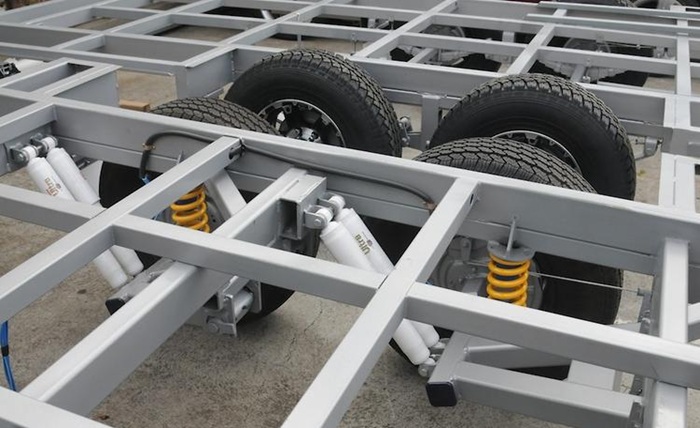
In the recreational vehicle (RV) industry, the chassis forms the backbone of every caravan. For manufacturers, designing and producing a high-quality chassis is not merely a matter of structural integrity—it defines the caravan’s safety, durability, performance, and overall user experience. In a market where customer expectations are constantly rising, understanding the priorities that matter most is critical for chassis manufacturers striving to stay competitive.
Safety Above All
The foremost concern for professional caravan chassis manufacturers is safety. The chassis must be capable of supporting the full weight of the caravan while withstanding stresses from rough roads, high speeds, and sudden maneuvers. This involves careful attention to load distribution, structural rigidity, and resistance to corrosion. Manufacturers often use high-strength steel or aluminum alloys, balancing weight with strength to reduce the risk of failure.
Braking systems and suspension components are also integral to safety. A well-designed chassis must provide secure attachment points for brakes, axles, and towing couplings to ensure stability on the road. Additionally, chassis engineers consider rollover prevention and the effects of dynamic forces during turns, acceleration, and braking. In this sense, safety is not just about withstanding accidents; it’s about preventing them.
Durability and Longevity
Durability is the next major consideration. Caravans are exposed to a wide range of conditions, from coastal humidity to icy mountain roads, and chassis components must resist corrosion, fatigue, and wear over time. Manufacturers often employ galvanization, powder coating, or other protective treatments to extend the lifespan of metal components.
Durability also impacts maintenance costs. A chassis that resists wear and requires minimal repairs adds value to the caravan, enhancing brand reputation and customer satisfaction. In competitive markets, this can be a decisive factor for buyers who plan long-term use.
Weight Optimization
Weight management is crucial for both performance and efficiency. A heavier chassis may provide strength but can reduce fuel efficiency, increase tire wear, and complicate towing. Conversely, a chassis that is too light may compromise structural integrity. Modern manufacturers focus on achieving the optimal balance using advanced materials and engineering techniques. Aluminum and composite materials are increasingly used to reduce weight without sacrificing strength, while computer-aided design (CAD) tools allow precise modeling of stress points and weight distribution.
Optimizing weight also affects regulatory compliance. Many countries have strict limits on the maximum allowable weight for trailers, and exceeding these can result in fines or void warranties. Efficient weight management ensures the caravan meets these legal requirements while maximizing payload capacity.
Compatibility and Versatility
A caravan chassis must be versatile enough to accommodate a variety of body styles and layouts. Manufacturers prioritize modularity in design, allowing for different lengths, widths, and configurations without extensive redesign. This flexibility not only reduces production costs but also enables brands to offer multiple models based on a single chassis platform.
Compatibility extends to towing vehicles as well. Chassis manufacturers must ensure that their frames are suitable for a range of tow vehicles, from mid-size SUVs to heavy-duty trucks. Correct hitch heights, axle placements, and tongue weights are critical to maintaining stability and performance when towing.
Compliance and Certification
In addition to engineering priorities, regulatory compliance is non-negotiable. Chassis manufacturers must adhere to local and international standards regarding materials, braking systems, lighting, and towing capabilities. Certifications such as ISO standards or industry-specific approvals not only ensure safety but also enhance market credibility. Manufacturers that neglect compliance risk recalls, fines, and reputational damage.
Innovation and Technology
Finally, innovation plays an increasingly important role. Advances in materials science, computer modeling, and manufacturing techniques allow chassis manufacturers to design stronger, lighter, and more durable frames than ever before. Some companies are exploring modular, adjustable chassis systems or incorporating smart sensors to monitor stress and wear over time. By embracing innovation, manufacturers can differentiate themselves in a competitive market and respond to evolving consumer demands.
Conclusion
For caravan chassis manufacturers, the most important priorities converge around safety, durability, weight optimization, versatility, compliance, and technological innovation. Each of these factors impacts not only the structural integrity of the caravan but also the overall user experience, maintenance costs, and brand reputation. Manufacturers that successfully balance these priorities can deliver reliable, efficient, and safe caravans that inspire customer confidence and loyalty.
Ultimately, a caravan chassis is much more than a collection of metal beams and bolts—it is the foundation upon which the entire caravan experience rests. Excellence in chassis design is, therefore, a direct reflection of a manufacturer’s commitment to quality, safety, and innovation in the RV industry.