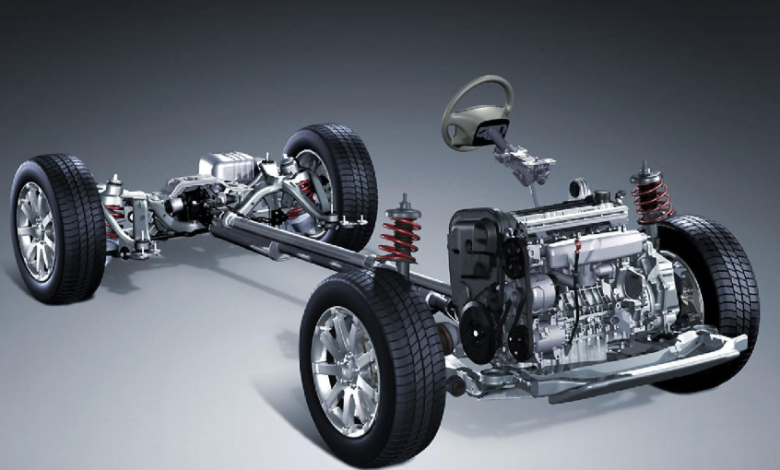
The chassis suspension system is a critical component of any vehicle, serving as the bridge between the wheels and the vehicle body. Its primary purpose is to provide stability, comfort, and control by absorbing shocks and vibrations from road surfaces. Manufacturing chassis suspensions involves a complex interplay of design, material selection, precision engineering, and quality control to ensure optimal vehicle performance and safety.
Understanding Chassis Suspensions
A chassis suspension system consists of several key components, including springs, shock absorbers (dampers), control arms, linkages, and mounting points. Depending on the vehicle type—be it passenger cars, commercial trucks, or high-performance sports cars—the suspension design may vary from simple leaf springs to sophisticated independent multi-link systems. The main goals of a suspension system are:
- Ride Comfort: Minimizing vibrations and jolts transferred to the cabin.
- Handling and Stability: Maintaining tire contact with the road to improve traction and control.
- Load Bearing: Supporting the vehicle’s weight and dynamic forces during acceleration, braking, and cornering.
These objectives dictate the choice of materials, manufacturing processes, and assembly techniques for suspension components.
Materials Used in Chassis Suspension Manufacturing
The selection of materials for chassis suspensions is critical to balance strength, durability, weight, and cost. Common materials include:
- High-Strength Steel: Used for control arms, leaf springs, and other structural components due to its excellent tensile strength and fatigue resistance.
- Aluminum Alloys: Preferred in lightweight vehicles and performance cars, offering a significant weight reduction while maintaining strength.
- Composites and Polymers: Increasingly used for bushings, mounts, and certain spring types to reduce vibration and noise while lowering mass.
- Rubber and Elastomers: Essential for vibration isolation in bushings and mounts, improving comfort and reducing wear on metal components.
Material selection is also influenced by factors such as corrosion resistance, machinability, and environmental conditions the vehicle will encounter.
Manufacturing Processes for Suspension Components
Manufacturing chassis suspensions requires a combination of metal forming, machining, heat treatment, and surface finishing. The process for each component may differ depending on its function, geometry, and material. Common manufacturing methods include:
1. Forging and Casting
Forging is widely used for high-strength components like control arms and steering knuckles. In forging, metal is heated and shaped under high pressure, which aligns the grain structure and enhances mechanical properties. Casting, on the other hand, is suitable for complex geometries like aluminum suspension arms. The molten metal is poured into molds and cooled, producing intricate shapes with reduced machining requirements.
2. Stamping and Bending
Steel sheets are often stamped and bent to form leaf springs, brackets, and other flat components. Modern stamping presses allow high-volume production with tight tolerances. Bending operations ensure precise curvature and spring constants in leaf springs and other resilient structures.
3. Machining and CNC Processing
Critical suspension components, such as control arms, ball joints, and hub assemblies, require precision machining. CNC (Computer Numerical Control) machines are used to achieve exact dimensions, surface finishes, and tolerance levels. Machining ensures proper fitment and alignment, which directly affects vehicle handling and safety.
4. Heat Treatment
Heat treatment processes, including quenching, tempering, and case hardening, are applied to enhance material strength, fatigue life, and wear resistance. For example, steel coil springs undergo tempering to achieve the desired elasticity and fatigue resistance necessary for long-term performance.
5. Surface Coating and Finishing
Suspension components are exposed to harsh environmental conditions, including moisture, salt, and debris. To prevent corrosion and extend service life, manufacturers apply protective coatings such as powder coating, zinc plating, or anodizing for aluminum parts. Additionally, surface finishing ensures smoother operation and reduces friction in moving parts.
Assembly of Chassis Suspension Systems
Once individual components are manufactured, the suspension system is assembled with careful attention to tolerances, alignment, and quality. Assembly may be performed manually or using automated robotic systems, depending on production volume. Key assembly steps include:
- Subassembly Fabrication: Components such as control arms, springs, and dampers are pre-assembled into subunits.
- Bushing and Mount Installation: Rubber or elastomeric bushings are pressed into place to reduce vibrations and noise.
- Fastening and Torque Control: Bolts, nuts, and other fasteners are tightened to precise torque specifications to ensure structural integrity and safety.
- Quality Inspection: Dimensional checks, visual inspection, and functional testing ensure the assembly meets design specifications.
Advanced suspension systems, such as adaptive or active suspensions, may also integrate electronic sensors, actuators, and controllers during assembly, adding complexity to the manufacturing process.
Quality Control and Testing
Quality control is a critical aspect of suspension manufacturing. Since suspensions directly affect vehicle safety, manufacturers implement rigorous testing procedures:
- Non-Destructive Testing (NDT): Techniques such as ultrasonic testing, X-ray inspection, and dye penetrant testing detect internal flaws without damaging components.
- Fatigue Testing: Components are subjected to repeated load cycles to simulate real-world driving conditions and identify potential failure points.
- Load Testing: Springs, dampers, and linkages are tested under various loads to verify stiffness, damping characteristics, and deflection limits.
- Corrosion Testing: Components are exposed to salt spray or other environmental conditions to evaluate their resistance to rust and degradation.
Quality assurance protocols ensure that every suspension system meets safety standards and manufacturer specifications.
Innovations in Suspension Manufacturing
Recent advances in suspension manufacturing focus on lightweight materials, improved durability, and enhanced vehicle dynamics:
- Multi-Material Systems: Combining steel, aluminum, and composites reduces weight while maintaining strength and rigidity.
- 3D Printing and Additive Manufacturing: Prototypes and low-volume parts can now be produced with intricate geometries that are difficult with traditional methods.
- Smart Materials: Adaptive dampers use magnetorheological fluids or shape-memory alloys to adjust suspension behavior in real-time based on road conditions and driving style.
- Automation and Industry 4.0: Robotics, AI, and IoT-enabled systems optimize production efficiency, reduce human error, and monitor component quality in real-time.
These innovations not only improve manufacturing efficiency but also enhance the performance, safety, and sustainability of vehicles.
Conclusion
Manufacturing chassis suspensions is a multifaceted process that combines engineering precision, material science, and rigorous quality control. Every step—from material selection and component manufacturing to assembly and testing—plays a vital role in creating a suspension system that balances comfort, handling, and durability. As automotive technology evolves, manufacturers continue to innovate, integrating lightweight materials, smart systems, and advanced manufacturing techniques to meet the ever-growing demands for safer, more efficient, and high-performing vehicles.
Ultimately, the chassis suspension is more than just a mechanical system—it is the backbone of a vehicle’s performance, comfort, and safety, reflecting the intricate craftsmanship and engineering excellence behind every modern automobile.