Every year, slip and fall accidents send millions of Americans to emergency rooms, pile up medical bills, and force people out of work for weeks or months at a time. Yet one of the most common questions victims ask is also one of the most misunderstood: Is the property owner actually responsible?
The answer is not always straightforward. Property owner liability in slip and fall cases is governed by a body of law called premises liability, and proving a claim requires more than showing that you fell on someone else’s property. You need to demonstrate negligence, and that standard comes with specific legal requirements that vary by state, visitor type, and circumstance.
This guide breaks down exactly what victims need to know in 2026, from how premises liability works to what you must prove in court and what defenses property owners typically raise.
The Scale of the Problem: Why Slip and Fall Claims Matter
Before getting into the legal framework, it helps to understand just how serious this issue is.
According to the National Safety Council, falls are the third-leading cause of unintentional injury-related death in the United States and account for roughly 9 million emergency department visits each year. The Centers for Disease Control and Prevention (CDC) reports that adults 65 and older experience about 36 million falls annually, with more than 800,000 requiring hospitalization.
In commercial and workplace settings, the numbers are just as alarming. The National Floor Safety Institute (NFSI) reports that slip and fall accidents account for over 1 million hospital emergency room visits per year, representing approximately 12% of all total falls. They are also the leading cause of workers compensation claims and a primary driver of liability lawsuits filed against property owners and managers.
For property managers and real estate operators, understanding the legal exposure these incidents create is critical. For victims, understanding the legal pathway to compensation is equally important.
What Is Premises Liability Law?
Premises liability is a legal concept that holds property owners and occupiers responsible for injuries that occur on their property due to unsafe conditions. It applies to a wide range of scenarios, including:
- Wet or slippery floors inside retail stores or apartment buildings
- Uneven pavement or cracked sidewalks
- Poorly lit stairwells or parking lots
- Broken handrails
- Icy walkways left untreated after winter weather
- Loose flooring or unsecured rugs
The core principle is that property owners owe a duty of care to people who enter their premises. If they fail to maintain reasonably safe conditions and someone is injured as a result, they may be held legally liable.
To understand exactly what that liability looks like, you first need to understand who qualifies as a “visitor” under the law.
Who Counts as a Visitor Under Premises Liability Law?
Not all visitors are treated equally under premises liability standards. Courts typically divide visitors into three legal categories, each carrying a different level of duty owed by the property owner.
| Visitor Type | Who They Are | Duty Owed by Property Owner |
| Invitee | Customers, tenants, or anyone invited onto the property for business purposes | Highest duty: Must inspect, maintain, and warn of known and reasonably discoverable hazards |
| Licensee | Social guests or visitors with permission but no business purpose | Moderate duty: Must warn of known hazards the visitor would not reasonably discover |
| Trespasser | Anyone on the property without permission | Lowest duty: Generally cannot set intentional traps; special rules apply for children under the “attractive nuisance” doctrine |
Most slip and fall claims involve invitees, such as shoppers in a grocery store, tenants in a rental building, or visitors to a commercial property. This category carries the highest standard of care, making it the most viable basis for a personal injury claim.
When Is a Property Owner Legally Responsible for a Slip and Fall?
This is the central question in any premises liability case, and it comes down to four elements a victim must establish.
- The property owner owed a duty of care.
As outlined above, the owner must have had a legal obligation to maintain safe conditions for the type of visitor involved. - The owner knew or should have known about the hazard.
This is where many cases are won or lost. A property owner is not automatically liable for every hazard on their property. The victim must show that the owner either:
- Had actual knowledge of the dangerous condition (e.g., an employee mopped a floor and did not place a warning sign), or
- Had constructive knowledge, meaning the hazard existed long enough that a reasonable owner exercising proper care would have discovered and addressed it.
- The owner failed to act reasonably.
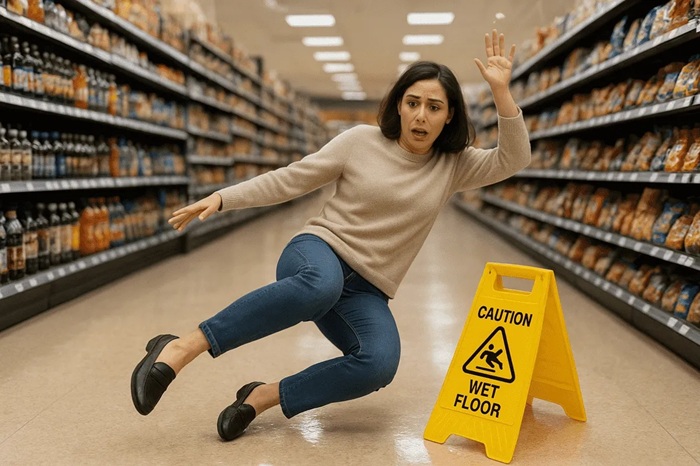
Even with knowledge of a hazard, the question becomes whether the owner took reasonable steps to fix it or adequately warn visitors. Leaving a wet floor unattended for three hours without a sign, for example, would likely constitute a failure to act with reasonable care. - The dangerous condition directly caused the injury.
The victim must connect the specific hazard to the fall and resulting injuries. A pre-existing medical condition does not necessarily disqualify a claim, but it may affect the amount of damages awarded.
If you have been injured and are unsure whether these elements apply to your situation, consulting with a qualified Houston slip and fall personal injury lawyer can help you assess the strength of your case based on the specific facts.
What Does a Victim Need to Prove in a Slip and Fall Case?
Proving a slip and fall claim requires gathering concrete evidence. Insurance companies representing property owners are experienced at minimizing payouts, and without documentation, even a legitimate claim can fall apart.
Key evidence includes:
- Incident reports filed at the time of the accident
- Photographs or video footage of the hazardous condition
- Medical records documenting the nature and severity of injuries
- Witness statements from people who saw the fall or the hazardous condition
- Maintenance logs or inspection records showing when the area was last checked
- Prior complaints about the same condition (these are particularly powerful in establishing constructive knowledge)
In Texas, for instance, courts also look at whether the plaintiff was aware of the risk and whether they exercised ordinary care for their own safety. This is tied to comparative negligence rules, which can reduce or eliminate a payout if the victim is found partially at fault.
What Are Common Causes of Slip and Fall Accidents on Properties?
Understanding how and why these accidents happen is useful for both property managers trying to reduce liability and for victims identifying the source of their claim.
The most frequently cited causes in premises liability cases include:
- Wet or recently mopped floors without adequate signage
- Spilled liquids in retail environments left unattended
- Ice or snow accumulation on entryways, steps, and parking lots
- Uneven flooring, loose tiles, or torn carpeting
- Inadequate lighting in stairwells, hallways, and parking areas
- Missing or defective handrails
- Cluttered walkways in warehouses or storage facilities
The Bureau of Labor Statistics has documented that slips, trips, and falls accounted for more than 211,000 workplace injuries resulting in days away from work, underscoring that these incidents are not limited to retail environments but extend to any premises where people work or congregate.
How Long Do You Have to File a Slip and Fall Lawsuit?
Timing is critical in premises liability cases. Every state has a statute of limitations, which is the legal deadline for filing a personal injury lawsuit. Miss this window, and your right to compensation is almost certainly gone regardless of how strong your case is.
In Texas, the statute of limitations for most personal injury claims, including slip and fall accidents, is two years from the date of the injury under Texas Civil Practice and Remedies Code Section 16.003.
There are limited exceptions, such as cases involving minors or situations where the injury was not immediately discoverable, but relying on these exceptions is risky. Acting quickly preserves your ability to collect evidence, secure witness testimony, and build the strongest possible case.
Property managers and building owners are also advised to document incidents immediately and consult legal counsel promptly, as early records often shape how liability is assessed months or years later.
What Defenses Can a Property Owner Use Against a Slip and Fall Claim?
Property owners rarely accept liability without a fight. Their legal teams and insurance carriers will typically raise one or more of the following defenses:
Open and Obvious Doctrine
If the hazard was clearly visible and a reasonable person would have noticed and avoided it, the property owner may argue they had no duty to warn about it. For example, a bright orange wet floor cone placed prominently at the spill site would support this defense.
Comparative Negligence
Texas follows a modified comparative fault rule. Under this standard, a victim can still recover damages if they are less than 51% responsible for their own injury, but the compensation is reduced proportionally. If a court finds you were 30% at fault, your damages are cut by 30%.
Lack of Notice
The owner may argue they had no actual or constructive knowledge of the hazard, especially in fast-developing situations like a spill that occurred moments before the fall.
No Causation
The defense may dispute that the condition actually caused the injury, particularly if there are gaps in medical documentation or if the victim has prior injuries affecting the same body part.
Understanding these defenses in advance helps victims gather the right evidence and avoid missteps that could weaken their claim. The premises liability attorney guide at Roxell Richards provides a deeper breakdown of how Texas courts evaluate these situations and what property managers and injury victims alike should know going into a legal dispute.
Real-World Scenarios: Is the Property Owner Liable?
| Scenario | Likely Liability Outcome |
| Grocery store employee mops floor, no sign placed, customer falls | Strong case for liability: actual knowledge, failure to warn |
| Customer spills liquid, another customer falls 2 minutes later | Harder case: constructive knowledge may be difficult to establish |
| Tenant slips on icy apartment steps after a freeze overnight | Depends on notice and maintenance policy; likely viable with documentation |
| Visitor falls on visibly cracked sidewalk they walked past previously | Open and obvious doctrine may reduce or bar recovery |
| Trespasser injured on poorly lit private property | Generally limited recovery; child trespassers may be different under attractive nuisance rules |
When Should You Contact a Slip and Fall Attorney?
Not every fall leads to a viable lawsuit, but certain circumstances strongly suggest you should seek legal counsel right away:
- You required emergency medical treatment or hospitalization
- You missed significant time at work due to your injuries
- The property owner or their insurer is denying responsibility or offering a low settlement
- You are unsure whether a hazard met the legal threshold for negligence
- The accident occurred on government-owned or commercial property
An experienced attorney can evaluate your case, gather time-sensitive evidence, deal with insurance adjusters on your behalf, and ensure you do not inadvertently say something that damages your claim. Most personal injury attorneys handling slip and fall cases work on a contingency fee basis, meaning you pay nothing unless they win.
Final Thoughts
Slip and fall accidents may seem minor from the outside, but their consequences can be life-altering. Broken hips, traumatic brain injuries, torn ligaments, and chronic pain are real outcomes that affect real people and families every year. Property owners have both a legal and an ethical obligation to maintain safe environments for those who enter their premises.
If you have been injured on someone else’s property in 2026, do not assume you have no case just because the property owner denies fault. The legal standards governing premises liability exist precisely to protect victims when negligence contributes to harm. Understanding those standards is the first step toward getting the compensation you deserve.