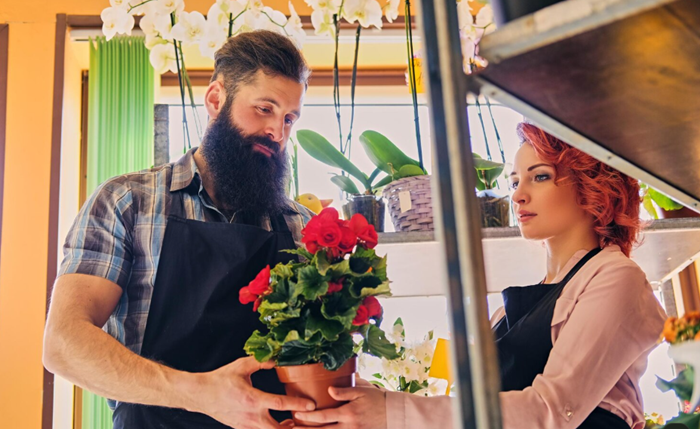
A bucket of fresh flowers arrives at a small florist, and the shop has only a short window to tell regular customers what is new. I would make a simple social video around that moment: stems on the worktable, a loose arrangement taking shape, and the finished bouquet near the door. The proposed film would feel like a glimpse into the shop’s morning.
My starting material would be photographs of the actual flowers available that day, taken with the florist’s permission. I would choose one bouquet rather than a collage of every stem in the store. A clear palette, perhaps pale pink flowers with dark foliage and cream wrapping paper, would give the video an identity that can survive a small phone screen.
The florist’s hands arranging the stems would be recorded directly. That action is both personal and specific, and it deserves to show the real work. Around that footage, I would build quieter moments that let the flowers and paper move just enough to feel present.
The finished bouquet would also need a strong still photograph. I would place it against a plain wall with light from one side, keeping the wrapping open enough to show the flowers. That reference would establish the shape and colors that the final video should preserve.
For the pause after the hands finish arranging, Seedance offers a way to explore a gentle movement around that bouquet. The AI video model can turn a reference and scene description into a motion study. I would keep the request modest: a slow camera drift, a slight movement in the paper, and no change to the flowers the customer can actually buy.
Let the available stems choose the story
I would begin with the florist’s real selection rather than an idealized arrangement generated from a vague prompt. If the shop has a compact bouquet with small flowers and broad leaves, the video should celebrate that scale. Adding large blooms that are not in stock would make the image more dramatic at the cost of accuracy.
The first photograph would show the stems before arrangement, laid diagonally across the worktable. I would leave the scissors and twine visible only if they contribute to the composition. A crowded table may look authentic, but the viewer still needs to recognize the flowers quickly. Removing unrelated clutter can make the real scene clearer without making it artificial.
A short opening clip could be filmed directly while the florist lifts the stems. The generated portion would come later, when the bouquet is already assembled. This split gives the story a human beginning and avoids asking the model to reproduce a complex hand movement that the shop can record naturally.
Give the bouquet one quiet motion
My first Seedance brief would describe the finished arrangement against the plain wall. “A small hand-tied bouquet matching the reference, with pale pink flowers, dark foliage, and cream paper wrapping. Slow, short camera drift from left to right. Keep the flower count, colors, and arrangement stable. The edge of the paper moves slightly in a light breeze.”
I would check the result for changes in the flower heads before considering the overall mood. A petal opening into a different shape or a leaf appearing from nowhere can be easy to miss during the first viewing. The bouquet should remain recognizable as the one in the reference, even if the movement is stylized.
If the paper becomes too lively, I would remove the breeze from the next brief and let the camera provide all the motion. The paper is supporting material, not the subject. A still wrapper and a stable arrangement can make a stronger product scene than a busy clip whose movement draws attention away from the flowers.
Make the real and generated shots belong together
The recorded arranging footage and the Seedance bouquet clip would share the same light direction. I would place the camera on the side of the worktable that preserves that relationship, so the cut does not suddenly reverse the highlights. This small choice helps the two sources feel like moments from one morning.
I would also keep the camera height similar. A close view looking down at the florist’s hands can cut naturally to a slightly lower view of the finished bouquet, but a dramatic aerial angle would create a different visual language. The video should feel intimate enough to belong to a local shop, not like an unrelated luxury campaign.
In the first rough cut, I would place the strongest hand movement before the generated pause. The florist ties the bouquet, the hands leave the frame, and the edit reveals the finished arrangement. That sequence gives the motion study a purpose: it lets the viewer look at what the work has produced.
Write the message after the flowers are visible
The text would arrive only after the bouquet is established. I would add a short, verified message in the editor, such as the arrangement’s name or the day it is available. Prices, collection times, and delivery areas would come from the shop, not from the creative brief.
The typography should remain separate from the generation. A clean line of text can be positioned where the background is quiet, with enough contrast to read on a small screen. If the bouquet fills every part of the frame, I would adjust the composition rather than place a heavy text box over the flowers.
A second Seedance variation might leave more space on one side for that message. I would compare it inside the actual social layout, with the caption and interface visible. A beautiful clip can be a poor promotional asset if the useful information has nowhere to sit.
Keep the morning’s rhythm
The edit would move from preparation to a short pause, then finish with the bouquet near the shop door. I would not cut on every beat of a music track. The flowers need a little time to be seen, and the hands already provide enough activity in the opening.
For sound, I would keep a little of the real paper rustle or the quiet sound of stems touching the table. A licensed music bed could sit underneath, but it should not erase the tactile quality of the scene. The result can feel warm without becoming sentimental or overly polished.
The final Seedance shot could show the bouquet in a simple vase or standing in its wrapping, depending on the actual product. I would avoid inventing a customer receiving it. The video is an invitation to the shop’s audience, not a claim about a completed sale or someone’s reaction.
Prepare the message for sharing
Before export, I would watch the sequence on a phone with the sound off. The viewer should still understand the progression from fresh stems to finished bouquet. The text needs enough time to read, and the flowers should remain the brightest point of attention.
I would create a still cover from the real photograph, so the video begins with a truthful representation even before playback. For a vertical version, the crop would preserve the bouquet’s overall shape rather than cut away the outer stems. If the framing feels cramped, a separate reference composition would be worth making.
The finished concept would give the florist a small, specific story to share on a Friday morning. Seedance would contribute a controlled moment of generated motion, while the actual flowers and recorded hands keep the work tied to the shop. I would want viewers to remember the arrangement and the care behind it, with the technique staying quietly in the background.